
Following

Table of Contents

Chapter 1 Chapter 2

In the world of The Immortal Architect

Visit The Immortal Architect

Ongoing 6137 Words

Chapter 2

5 0 1

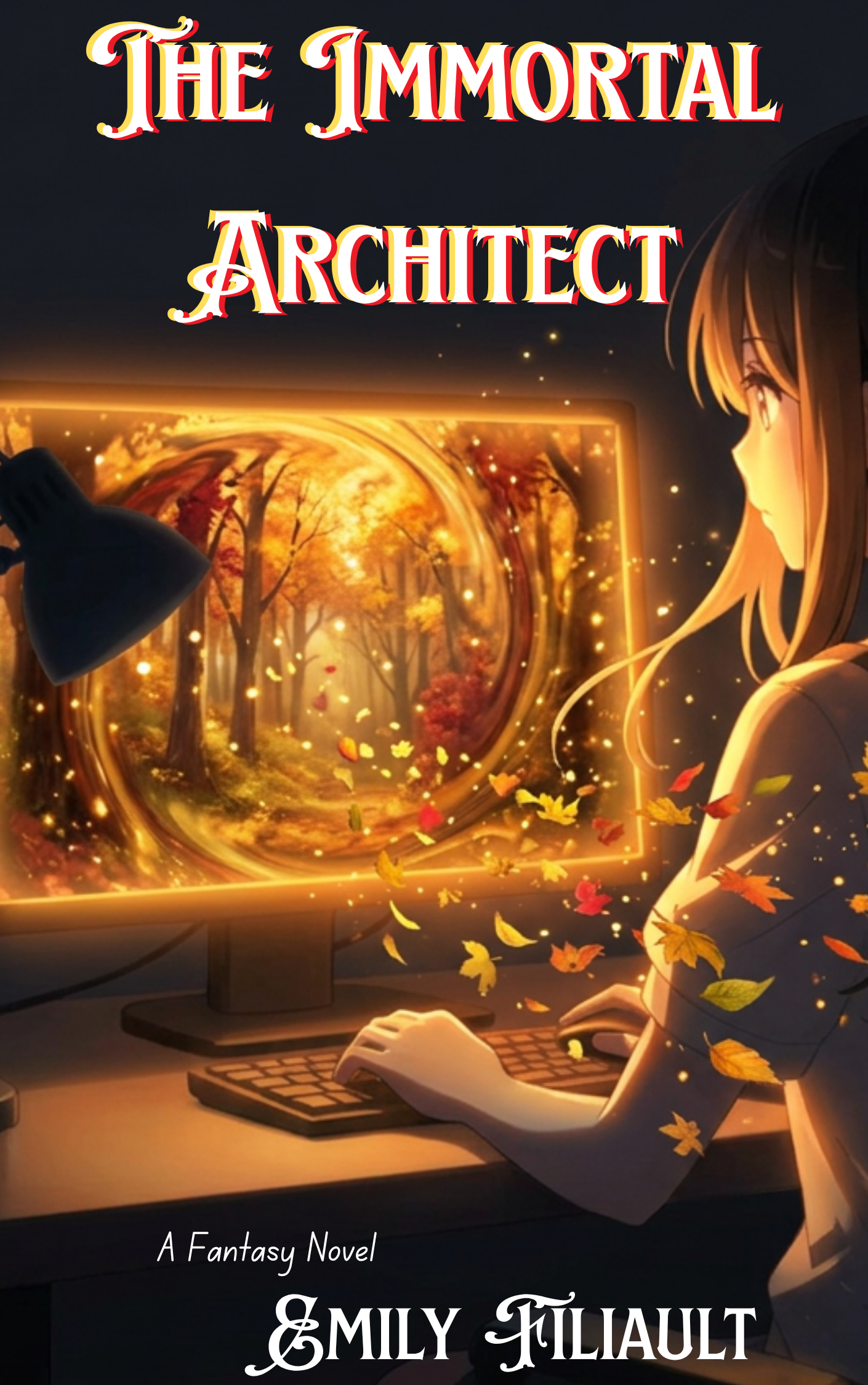
Estelle was in denial. She sat very still in the grass, breathing hard, waiting for the world to… correct itself. For the forest to flatten into pixels. For a UI to blink into existence. For something to acknowledge that this wasn’t how things were supposed to work. Nothing happened. Birdsong filtered through the trees, light, uneven, real. The wind moved through branches with a soft rush that didn’t loop or repeat. Somewhere nearby, something rustled through underbrush, too irregular to be ambient noise. Estelle swallowed.

“…okay,” she said slowly. “That’s fine. That’s...this is fine.” She pushed herself to her feet, brushing grass and dirt from her clothes in quick, distracted movements. Her hands were shaking just enough to be annoying.

“Step one,” she muttered. “Figure out the interface.” Because of course, there was an interface. There had to be. She turned in a slow circle, scanning the air like she might catch it at the right angle, like a glare on glass. Nothing. No minimap. No health bar. No glowing icons hovering helpfully in her vision.

“…rude.” She lifted her hand experimentally; a two-finger swipe was the physical command in VR games.

“Status.” Nothing. She frowned, trying again, more confident, thinking about other voice commands.

“Open menu.” Silence.

“Inventory.” Still nothing. Her frown deepened into disbelief.

“You’re kidding me.” She straightened slightly, clearing her throat like maybe she just hadn’t committed enough.

“System,” she said, with weight. “Open.” The forest continued existing, completely unimpressed. A laugh escaped her, short, incredulous.

“No way. No way you dragged me into a game world and didn’t give me a UI.” She pointed accusingly at the trees.

“That’s illegal.” Still nothing. Estelle paced in a small circle, mind racing now, grabbing at every anime, every game, every late-night rabbit hole she’d ever fallen into.

“Okay, okay. Different approach.” She held her hand out dramatically in front of her.

“Activate.” Nothing.

“Initialize.” Nothing. She narrowed her eyes.

"Open sesame?” The wind rustled. A leaf fell. She stared at it as it drifted lazily to the ground.

“Wow,” she said flatly. “Super helpful.”

She stopped pacing and stood still again, forcing herself to think. She had built this world. Not in detail, not every tree, not every leaf, but the rules. The foundation. Magic didn’t just happen. It had requirements. “Cores,” she said quietly. Right. Aetherbeasts. You don’t just cast spells. You earn them. You take them. You survive long enough to use them. She nodded slowly, trying to ground herself in the logic she’d created.

“So no core…” She held out her hands again, as if expecting something to appear. “No magic.” She exhaled.

“That tracks.” It did. It also sucked. Still, she didn’t give up immediately. She closed her eyes.

“Fine,” she muttered. “If it’s not a system… maybe it’s intent-based?” She focused, trying to imagine it, pulling something inward, pushing energy outward. Like she’d seen a hundred characters do. imagining the pop-up window of a status screen. Anything. She concentrated until her head started to ache, until her shoulders tensed and her breath grew shallow. Nothing happened.

No warmth. No spark. No shift in the air. Just… her, standing in a forest, trying very hard to look like she knew what she was doing. After another few seconds, she cracked one eye open.

“…okay, that’s embarrassing.” She dropped her hand.

“Cool. Great. Love that for me.” A branch snapped nearby, and Estelle froze. Not the soft rustling from before. Something heavier. Something deliberate. Every thought in her head stalled out at once. Slowly, very slowly, she turned toward the sound. If she was going to die by the hands of one of her own creations, she was darn well going to look it in the eye!

Leaves shifted. A small shape pushed through the underbrush, parting it without urgency, like it had all the time in the world. Estelle’s stomach dropped before immediately flipping again for an entirely different reason.

“Oh.” The creature that stepped into view was... small. Tiny, even. About the size of a kitten, with soft, fluffy fur and oversized eyes that seemed just a little too bright. A long, ringed tail trailed behind it, flicking lazily from side to side, but it was the wings that made it unmistakable. Delicate. Wide in proportion to its body, patterned in soft gradients of color, like a butterfly stretched into something living and curious. Two thin antennae peeked out from between small, pointed ears, twitching faintly as it looked around. It noticed her as if she were something special. It blinked, once, then again taking her in as if her existence was something unique and it wanted to know more. Estelle stared back at it. A few seconds passed.

“…no way,” she whispered.

Her brain scrambled to catch up, pulling from her memory, notes, passing decisions, and half-forgotten design choices made in a rushed desire to have a filled-out bestiary. Lemur with traits of a butterfly, she had made it docile. Curious, not aggressive. 

“What did I call you…?” she murmured, squinting slightly as if that might help. The creature tilted its head. Then, without warning, it hopped forward once, light, barely disturbing the grass. Estelle flinched instinctively, then immediately felt ridiculous.

“No, no, you’re fine,” she said quickly. “You’re...you’re fine.” Her lips curled into something halfway between a grin and pure disbelief.

“Lemora,” she said finally, the name clicking into place. The creature’s antennae twitched again, as if acknowledging it, or maybe just reacting to the sound.

“Yeah,” Estelle breathed. “Lemora. You’re… harmless.”

Mostly. More curious than anything. Ran away from danger more often than not. She remembered that much. Her gaze sharpened, darting past the small creature, scanning the surrounding forest.

Lemora spawned somewhere in the northern area of the Nyxian Forest. This solidified her idea of where she was. Estelle’s breath hitched slightly. She looked back at the creature. Then at the trees. Then higher, trying to gauge the sun, the slope, the subtle markers she’d built into the terrain without thinking.

The Lemora chirped softly, a light, almost musical sound. Then it took another small step closer, wings shifting in a gentle, lazy flutter. Completely unconcerned and utterly at ease. Like the world wasn’t wrong at all. Estelle stared at it, unease creeping under her skin despite how harmless it looked. It wasn't supposed to like people... and yet here it was, looking up at her as if it were a cat asking for pets from their beloved owner. 

The Lemora didn’t follow her. It lingered for a while, hopping from root to root, fluttering its wings in small, idle bursts like it had nowhere better to be, before finally vanishing into the underbrush with a soft rustle. Estelle watched it go.

“…right,” she murmured. “Stay focused.”

Cute didn’t mean safe. Familiar didn’t mean predictable. And right now, predictability was the only thing she wanted. She turned slowly, forcing herself to take in the forest properly this time, not as a shock, not as a miracle. As terrain. As data. As something she had designed.


The Nyxian Forest. The name came back first, then the details, layered, half-remembered, but there. Not just a forest, it had unique properties. It was a full region. Located on a peninsula. Stretching upward like a hand reaching toward the colder reaches of the continent. Narrowing as it climbed north, until eventually, it hit the ocean. If she moved northeast, she’d hit the coast eventually.

Follow it far enough, and she’d reach the first city she’d placed along the eastern edge, and north of that was a village. Small, sparse, built for survival, not comfort. She nodded to herself.

“Alright,” she murmured. “Simple.”  Pick a direction. Commit. Don’t second-guess. She tilted her head back, squinting upward through the canopy. Leaves caught the light above her, burnt oranges, deep reds, muted golds, colors that never quite shifted, never quite fell. Autumn. Perpetual autumn.

The realization settled differently now that she was inside it. The air carried that dry, crisp edge of late fall, but underneath it, something softer lingered. A faint sweetness, like overripe fruit and distant pollen, as if the forest couldn’t quite decide whether it was ending or refusing to die. Her gaze tracked the sunlight as it filtered through and found a break in the canopy. 

“…east,” she said under her breath. Then, thinking a little harder about the layout of the region, she adjusted her direction.

“Northeast.” Good enough, it had to be. She started walking, using the angle of the sun and the shadows where it breached the canopy. Leaves crunched softly underfoot, though not as many as there should have been. The ground was strangely clean, no thick drifts, no decay swallowing paths whole. Just enough to remind her where she was.

The trees gave way just slightly as she moved between them, not opening, not making it easy. Just… allowing it, at least, for now. The deeper she went, the stranger it felt. Not immediately. Not in a way she could explain. It just had this feeling that made her think wrong

She noticed it in the colors first. The reds were too consistent. The golds lingered too long in the same places. Branches that should have shed leaves still held onto them, stubbornly, like the season had stalled mid-thought.

The wind moved next, soft at first, brushing past her shoulder, catching the ends of her hair. It came and went in uneven bursts, not following a clear pattern. Not random, either. She slowed and watched the leaves overhead. They didn’t move all at once. They shifted in pockets. Like something moving through them. She frowned.

“…wind patterns don’t isolate like that.” Not naturally. Not unless something was obstructing or directing them. She didn’t dare finish the thought. She kept walking, step by step, stopping now and then to check the light. adjust and re-correct her course. Northeast, always northeast. After a few minutes, or maybe longer, she felt it again. That pressure. The sense of something just out of sync with her movement. She stiffened slightly but didn’t turn around. Not yet, first she listened. The leaves rustling above her, branches creaking softly. The faint hum of… something, an insect-type aetherbeast perhaps. Her throat tightened as she thought of the types of aetherbeasts she had created. 

“…don’t,” she whispered to herself. “Don’t make it real.” Because if she turned, and nothing was there, that was worse. She doubled down on her direction, eyes snapping upward to the sun. Still there. Still consistent. The one thing that didn’t feel like it was shifting, just setting.

“…good,” she breathed. The sky doesn’t move. The sky can’t move. It was a constant variable, and she clung to it. A faint shape flickered at the edge of her vision. To the right. In the brightest patch of sunlight. She turned her head sharply. Nothing. Just leaves drifting slowly down… except, No. They didn’t land. She blinked as she watched closer. They vanished before they hit the ground. Estelle froze. Another leaf fell. This one landed the way it should, normal. Completely, utterly normal. Her stomach twisted. 

“…cool,” she said softly. “Yeah. That’s fine.” The ground sloped slightly now, subtle, but there. She noticed it because she knew the peninsula’s shape. It reached northward, tightening, and finally, pulling inward.

“You’re guiding people,” she muttered. The realization came with a flicker of something like admiration. She’d built it that way. Not forcing paths. Nudging them. Terrain guiding choice until people convinced themselves it had been theirs all along.

“That was clever,” she said. “…I hate that.”

The feeling behind her stayed. Constant now, not closer, just… watching her. She adjusted her pace. The lingering presence adjusted as well. Her fingers curled slightly at her sides.

“…you’re not real,” she said. The words felt thin the moment they left her mouth. A stronger gust of wind rolled through, sudden and sharp enough to make her flinch. Leaves lifted in a spiral, not wide, not chaotic, focused. They twisted through the trees ahead of her, forming a brief, shifting corridor before scattering again as if nothing had happened. Estelle stared at the space it left behind.

“That’s new,” she whispered. Wind didn’t behave like that, not here. Not without... She shook her head, scattering her thoughts, catching on something she didn’t want to name.

The forest presence grew denser as if my refusal to acknowledge it made it angry. The space between trees felt tighter, even when it wasn’t. Shadows lingered longer beneath branches, and the air felt heavier. She swallowed.

“…I wanted a forest that was enhanced from the decaying cores of aetherbeasts. I wanted it to be alive, allowed to alter paths, but stuck in an autumn that would never end." The light shifted ahead, stronger now, cutting cleanly through a break in the canopy. 

“If I keep going,” she murmured, voice quieter now but steadier for it, “I hit the coast.”

And after that, people. Civilization. Answers. Or at least someone else to tell her she wasn’t losing her mind. Behind her, the forest breathed. Ahead, the land narrowed, ever so slightly. Estelle didn’t look back again. She could feel the forest guiding her, but at least it wanted her to go in the direction of what she hoped were villages. 

The forest didn’t end all at once. There was no clear line. No moment where one step was wilderness, and the next was safety. It just… loosened, almost reluctantly. At first, Estelle didn’t notice the shift. She was simply too tired. Her steps had slowed hours ago, if it had been hours. Time still slipped too easily through her fingers to measure properly. Her legs moved out of habit now, each step placed because the last one had been. Leaves still crunched beneath her feet. The air shifted, too, losing that dense, watching weight the deeper forest had carried. The wind moved more freely here, brushing past her like something uninterested instead of aware of the faint salty spray that accompanied the coast. She stumbled slightly, catching herself on a low branch.

“…keep going,” she murmured. She wasn’t sure if she believed it anymore. What if she had come into her world before the villages were even established? The light changed. That was what finally broke through the fog in her head. Not brighter, just clearer. Instead of fractured beams slipping between too many leaves, sunlight spread in wider patches that grew warmer, more grounded. 

Estelle slowed, lifting her head. Ahead, through a thinning line of trees, there was space. Her chest tightened.

“No way,” she breathed. She pushed forward, half-stumbling now as her tired body tried to decide if this was worth one last effort. The trees gave way, one by one, and the branches thinned. The canopy broke apart. Then it suddenly opened up and she stepped out of the forest.

The sky stretched above her, wide, uninterrupted, a pale blue brushed with thin clouds. The air smelled different here, earth and salt instead of leaf rot and pollen. Fields spread out in uneven patches beyond the tree line. Not perfect rows, working land with crooked fences and marked boundaries. Crops grew in sections that followed the shape of the terrain rather than forcing it into symmetry. Farther ahead, there was movement. Outlines of buildings. Her breath caught as her eyes swelled with relief. The village. It wasn’t small, not the same generic stamp she had placed on her world map, not a handful of huts struggling to survive. It was… established. Wide enough to feel like a place people planned to stay.

Stone and timber buildings clustered around open roads, their shapes simple but deliberately built. Sloped roofs with broad windows. Cloth awnings in soft, faded colors. Nothing extravagant, but still beautiful in their simplicity. Smoke rose from chimneys in thin, steady lines. People moved between structures, figures in layered clothing, fitted but practical, with touches of color and embroidery that felt… intentional. The entire village looked like functional beauty. Estelle stared.

“…I made this,” she whispered. And for the first time, it scared her. Her legs gave out before she reached it. She didn’t fall all at once. It was slower than that. A stutter in her step, a misplacement of weight, then the ground rising too fast to correct. She hit her knees first, barely catching herself with her hands before the rest of her followed. The world tilted, and her vision blurred at the edges.

“…no, no, no—not now,” she muttered weakly, trying to push herself up again. Her arms shook, but they didn’t hold. She sank back down, the effort draining from her faster than she could fight it. Her throat ached, dry, empty, desperate. When had she last eaten? Drank? She couldn’t remember. The thought flickered and died before it could fully form. Footsteps. Closing in on her, and followed by muffled voices.

“…hey—someone’s out there…”

“…from the forest? Without a Nyxlight?”

“…she looks half dead...”

Estelle tried to focus, but the world slipped in and out of shape, sound stretching thin and distant.

“I’m...fine,” she managed, though it came out more like a breath than a word. Hands reached her. Careful, not afraid. They lifted her with practiced steadiness.

“Easy,” a woman’s voice said, firm and calm. “You’re safe.”

Safe.

The word landed… strangely. Too big to process. Estelle’s head tipped forward, her awareness slipping. The next time she surfaced, everything was softer, dimmer. The world moved in slow, uneven pulses instead of sharp clarity. Warmth surrounded her, thick, steady, almost heavy. A bed. She could feel it beneath her. Her lips were dry; the feeling of windburn confirmed as much. Something touched them, a cool edge, then the faint trickle of water.

“Small sips,” a voice said nearby. “Not all at once.” Estelle obeyed without thinking, swallowing slowly, the liquid scraping down her throat before settling into something like relief.

“…good,” the voice murmured. She drifted again.

“…forest fatigue,” the same voice said somewhere above her. “Dehydration, too.” Another, quieter voice spoke. 

“Nyxian?”

A pause.

“Yes,” the first answered. “Deep enough to matter.” A faint shift, cloth rustling, something placed nearby.

“You’re lucky someone spotted you when they did.” Estelle tried to open her eyes. Managed it, barely. The room blurred into shape around her, overflowing shelves, bottles made of glass, bundles of dried plants hanging from beams. The scent in the air was sharp and clean, herbal, layered, grounded in something she couldn’t fully name yet. An apothecary. A woman leaned into view, older, but not frail. Her posture was steady; her movements deliberate as she adjusted something near Estelle’s shoulder.

“Stay still,” she said, not unkindly. “Your body doesn’t know where it is yet.” Estelle swallowed.

“…I do,” she rasped. The woman raised an eyebrow slightly.

“Do you?” Estelle opened her mouth, but nothing came out. Because she didn’t know what version of “here” she meant. The apothecary turned slightly, reaching for a small bowl from a nearby table.

“We’ll start light,” she said, more to herself than to Estelle. “Water first, then something with sugar.” She dipped a cloth into the bowl, wringing it gently before dabbing it along Estelle’s forehead.

“Nyxian drains you,” she added, voice steady, almost conversational. “People think it’s just the distance, but it’s not.” Her hand paused briefly.

“Forest like that… it asks something of you while you’re in it.” Estelle’s gaze flickered, trying to focus.

“…yeah,” she breathed. “I noticed.” The woman hummed softly in acknowledgment. She moved again, selecting a small jar from the shelf.

“This will help,” she said, prying it open. “Mashroot extract. Restores energy faster than basic broth, but it’s harsh if you’re not careful.” A faint smile touched her lips.

“So we’ll be careful.” She spooned a small amount into a cup, diluting it with water before bringing it toward Estelle. “Drink.”

Estelle obeyed. The taste hit immediately, sharp, earthy, almost bitter, but underneath it was warmth, something that spread outward from her chest and into her limbs like slow fire. Her fingers twitched weakly.

“…that’s new,” she murmured.

“Local crop,” the apothecary said. “Grows best in fall-rich soil. Holds nutrients well.” She set the cup aside.

“Most of the farms around here cultivate some variation of it. Keeps people on their feet longer than they should be.” A beat. “Useful trait, in this region.”

Estelle drifted again, the warmth easing her deeper into the bed. Voices continued somewhere above her, calm, steady, grounded in things that made sense. Something about plants, harvest cycles, and water stores. Things she’d designed but never thought she’d depend on.

“…you came from the forest,” the apothecary’s voice said again, quieter now, closer. Not a question, an observation. Estelle let her eyes close.

“…yeah.” A pause. “…alone?” the woman asked. Estelle’s lips parted slightly. The answer felt heavier than it should have been.

“…yeah.” Another pause, longer.

“Alright, rest,” the apothecary said gently. “We can figure everything else out when you’re upright.”

Estelle didn’t argue. Didn’t try to hold onto consciousness any longer. The bed was warm, and the air smelled safe. For the first time since she’d been pulled into this world, she let go.


When Estelle woke again, it wasn’t the same drifting blur. The world held. Sound stayed where it belonged. Shapes didn’t melt at the edges. Her body still felt heavy, like she’d borrowed someone else’s limbs, but it responded when she shifted, pushing herself slowly upright against the pillow. The apothecary noticed immediately.

“Good,” the woman said from across the room without looking up. “That means you’ll live.” Estelle blinked.

“That’s… reassuring.” The woman hummed faintly, setting aside a bundle of dried herbs before finally turning toward her.

“You’re thinking clearer?”

“A little.”

“Then you can walk a little.” A pause. “And if you can walk, you can see where you’ve ended up.”

Estelle opened her mouth to protest and then closed it again, because she did want to see the village that had been no more than a blurb on her screen. So badly it almost hurt.

The village felt different from the outside. It had looked grounded. Structured. Safe. Inside, it felt… busy. Alive in a way the forest hadn’t been. The apothecary walked at an easy pace, not slowing for Estelle, but not pushing her either. Just… expecting her to keep up. Which she did, barely.

“Stay close,” the woman said. “You look like you might fall into the nearest cart.”

“That’s fair,” Estelle muttered. The first thing she noticed was the wall. She’d seen it distantly before, just a suggestion of structure, but up close, it felt heavier. Tall wooden stakes, sharpened to cruel points, lashed together into a solid barrier that ringed the village. Not elegant, they didn't need to be. Nothing decorative or fancy, it was purpose-built, made for survival-first. Estelle tilted her head back slightly, tracking its height.

“…that’s not just for show.”

“No,” the apothecary said simply. Estelle glanced at her.

“What hits it?” The woman didn’t answer right away. Just kept walking.

“Enough,” she said finally as if it answered the question. That was worse. They moved inward, the paths opening into something wider, the market square. Estelle slowed without realizing it. It sat at the heart of the village, built in a broad circle where roads converged. Stalls stood half-filled, cloth canopies tied back while people moved through them, trading, carrying, working.

It wasn’t the market that held her attention. It was the structure at its center. Stone. Low and circular, set into the ground. A reinforced entrance sloped downward, partially covered, guarded not by soldiers, but by presence. Awareness. People who kept glancing at it without meaning to. Estelle frowned faintly.

“…that’s not storage.”

“No,” the apothecary said again. Estelle tore her gaze away from it.

“What is it?”

“A place you go when the walls don’t hold.”

Estelle went still. Oh. The realization hit her harder than she thought it would. The apothecary kept walking, as if that explanation was enough. Estelle followed, slower now, her eyes drifting between the market and the bunker behind them.

“…that leads somewhere?” she asked after a moment. The woman spared her a small glance.

“You think we’d build a hole in the ground and hope for the best?”

“…fair.”

“It tunnels into the forest,” the apothecary continued. “Hidden exits. Paths we don’t advertise.”

Estelle frowned.

“Wouldn’t that just—lead you back into danger?”

“Yes.” The answer came easily.

“That’s why it’s only used when staying is worse.” They moved on.

The buildings changed as they went. Closer to the center, they were broader, multi-room structures, reinforced beams, and more care in construction. Farther out, they narrowed into homes that were simple, sturdy, yet built with thicker walls than she would’ve expected for wood. Not fragile or slum homes as she expected, they weren't temporary.

Every structure felt like it had been made with the same quiet understanding. It might have to hold. They passed crop fields next; the farmland stretched out unevenly, following the rise and fall of the land. Crops she didn’t fully recognize filled the plots, thick-rooted plants, low-fruiting growths, vines supported by simple wooden frames.

People worked them in a steady rhythm. Mostly women, enough that Estelle noticed. They were directing, measuring, and correcting. Men were there too, hauling, lifting, reinforcing supports, but the decisions clearly came from the women. Estelle’s gaze lingered.

“…right,” she muttered under her breath. Matriarchal. She had input that aspect as an ode to her grandmother's fervent belief in women's empowerment. But now, it wasn't just theory, she was watching it happen in practice. They crested a slight rise, and the apothecary nodded ahead.

“Her land.”

At the top sat a larger structure, not extravagant, but undeniably more. A wider foundation, reinforced posts, and clean space around it where nothing crowded too close.

“‘Her’,” Estelle echoed.

“The mayoress.”

“Mayor,” Estelle corrected automatically. The apothecary’s mouth twitched.

“No.”

That was the end of that. They didn’t approach the estate directly; instead, circling past it toward the far edge of the village. The smell changed before Estelle saw it. Salt, wet wood, water. The wharf stretched out beyond the last line of houses, simple docks reaching into a wide inlet, boats tied securely along the edges. Not many, but enough to matter. Trade, supplies, a connection to the rest of the world, and a means of escape. Estelle’s throat tightened slightly.

“…you’re the northern tip.”

“Close enough.” Her gaze followed the horizon, past the water. 

“…east coast’s that way,” she said quietly, pointing.

The apothecary studied her briefly.

“You’ve traveled?”

“No,” Estelle said. She paused, realizing how strange that might sound. “…but I know where things are supposed to be.”

The woman didn’t comment on that. They turned back toward the village. Estelle’s legs were starting to shake again, less from panic now, more from the simple reality that she hadn’t fully recovered. She slowed, just a little. The apothecary noticed anyway.

“Almost done,” she said. When they returned to the apothecary’s building, the air inside felt warmer, grounded in familiar scents. Safe. Or as close to safe as this world allowed. The woman moved past her toward a small table, picking up a folded piece of paper. Estelle eyed it warily.

“That looks like responsibility.”

“It is.”

The paper was pressed into her hand. Estelle stared at it. A list of chores that had Estelle's eyebrows rise. fetch water (morning & evening), sort drying herbs, grind mashroot (supervised), assist with inventory, clean workspace.

She blinked.

“…you’re assigning me chores.”

“I’m giving you a place to stay,” the apothecary corrected.

Estelle looked up. The woman met her gaze steadily.

“You don’t have coin. You don’t have trade. You don’t have a name anyone here knows. And I could use an extra hand.” Estelle looked at the older woman, slightly confused.

“So you work,” the apothecary continued. “You eat. You rest. You recover.” A pause. “Or you leave.”

Estelle stared at her for a moment. Then looked back down at the list.

“…I’ll take chores.”

“Good.” The apothecary turned back to her shelves, already moving on.

“You’ll stay here for now,” she added. “We’ll sort something more permanent when you’re not one bad step from collapsing again.” Estelle huffed faintly.

“Appreciated.” She lowered herself carefully onto the edge of the bed, staring at the list in her hands. Chores, work, a routine, it should’ve felt… small, limiting. Instead, it felt grounding. The first thing in this world that didn’t immediately threaten to kill her or confuse her beyond reason. Fetching water, sorting herbs. Just don’t die. She let out a slow breath, tension easing just slightly from her shoulders.

“…okay,” she murmured. One step at a time. Outside, the village moved on, steady, practiced, alive in ways she was only just beginning to understand. Inside Estelle Sparks, creator of Terralia, was now a simple villager. She smiled at the thought, it was a feeling like joy, but deeper, home. It felt like home.

The first few days blurred together. Not in the way the forest had, alternating between reality and dream state, but in a steady, grounded rhythm that Estelle clung to harder than she wanted to admit. A calming cycle of everyday life. Wake up with the sun, work until the day is done, help prepare and enjoy dinner with Helena, and get a good, full night's sleep, and the cycle repeats.

The well became her first constant.

It sat near the edge of the market square, ringed in worn stone and reinforced wood, the rope thick with use and faintly rough against her palms. The first time she hauled water, her arms had protested almost immediately. The third time, she learned how to lean with her weight instead of pulling with her strength. By the fifth day, she could draw a full bucket without stopping midway to curse under her breath.

“Better,” the apothecary had said, watching from the doorway with a critical eye and a soft smile.

“High praise,” Estelle had muttered. People started recognizing her. Not in some grand way. Just in passing. A nod here, a glance that lingered one heartbeat longer than before. A woman who worked the well more often than not, broad-shouldered, hair tied up in a thick braid, started handing Estelle the bucket before she asked.

“New hands, yeah?” the woman had said once, matter-of-factly. Her accent was thick with a flavor she couldn't quite pin down.

“Apparently.”

“Don’t rush it,” she added. “The rope always wins if you do.”

Estelle had stared at the coil of it like it was personally responsible for her suffering.

“…good to know.”

The garden came next. Behind the apothecary’s shop, rows of low, stubborn plants pushed up through soft autumn earth. Leaves in dusky greens and faded golds filled the beds, roots thick beneath the soil.

“Pull the weak ones,” the apothecary had instructed.

“Define ‘weak,’” Estelle had asked. The woman had crouched beside her, tapping one plant gently.

“This one spends more time taking nutrients than giving them back.” Estelle frowned.

“They take nutrients?”

“They don’t thrive.” A pause. “They fail quietly.”

That had stuck with her, for reasons she didn’t fully want to unpack. Weeding was slower work. More thought than effort, learning the different signs of a weak versus a strong plant. She learned the difference between growth worth keeping and growth that choked everything around it. Learned to recognize the edges of leaves, the feel of roots slipping free of soil. Her hands stained easily, dirt settling under her nails, the smell of the earth lingering long after she washed them clean. It was… grounding. Simple, in a way, nothing else had been since she arrived.

The sap buckets were her least favorite. Mostly because they took her back toward the edge of the village, toward the unsettling trees. They were set along the outer ring, fixed to trunks where thick, amber sap oozed slowly into carved wooden containers.

“Don’t linger,” the apothecary had told her on the first day. “Collect, replace, return.”

Estelle hadn’t asked why. She hadn’t needed to. The wall loomed nearby, tall, spiked, never far from view, but the forest beyond it felt… closer than it should have. Watching with that strange and overwhelming presence. Even now.

By the fourth day, she started talking to herself while she worked. Not loudly, but enough to fill the silence. Even in her own world, she had never done well with silence. There was the noise of the city at her workspace, and the blaring music at her home. Getting used to that silence was a challenge.

“Okay,” she muttered one morning, swapping out a half-filled bucket. “You’re definitely the kind of thing that gets weaponized later. Sap that burns, hardens, explodes…” She paused.

“…please don’t explode.” The tree, thankfully, did nothing. The hunt-and-gather shop became her last regular stop. It sat near the outer wall, close enough to smell the forest when the wind shifted, far enough that people still treated it like part of the village instead of something borrowed from the edge. The door creaked when she pushed it open like a customer bell that went off every single time.

Inside, the space was cluttered, but organized clutter. Bundles of different materials were stacked neatly. Tools hanging in deliberate rows. Shelves filled with things she recognized and things she very much didn’t. A bulky man stood behind the counter most days, lean, quiet, with the kind of watchful stillness that made Estelle immediately aware of how much she wasn’t. He didn’t ask questions. Didn’t seem interested in where she came from. Just nodded when she approached.

“List?” he’d say. She’d hand it over. He’d gather what she needed. Simple. Efficient. On the third day, she lingered a moment longer than usual, curious about this quiet giant.

“…what do people bring you?” she asked, gesturing vaguely to the shop. The man glanced at her, then at the shelves as if the walls spoke for themselves.

“Whatever they can carry.”

“Helpful,” she said dryly.

A faint flicker of something, not quite a smile, touched his face. His eyes had a sparkle she hadn't noticed before, and she noted that it was connected to his interest in his wares. 

“Beast parts,” he clarified. “Roots. Sap. Cores, if they’re lucky.” Estelle’s chest tightened slightly at that last word.

“…right.” He watched her a second longer.

“You’ll see one eventually,” he said. It didn’t sound like a promise. His voice held a heaviness that spoke of inevitability. By the end of the week, the village felt less like a place she was passing through and more like something she was becoming a part of. She knew the paths now, the shortcuts between buildings, the way the market shifted through the day, when the wharf was busiest and when it wasn’t worth going near.

She knew which houses burned warmer at night. Which doors stayed closed? Which people watched the wall more than they spoke to others? She learned Helena’s rhythms, too. The woman rarely wasted words, but when she did speak, it was precise.

“Grind finer.”

“Too much water.”

“That one’s spoiled—don’t mix it.”

Once, when Estelle asked why a certain batch of herbs smelled different, the woman had paused just long enough to answer:

“So you learn to trust your nose before it matters.”

Estelle hadn’t asked what “mattering” looked like. At night, the village quieted. Not completely, there was always the muffled sounds of the forest, but it was enough to feel the absence of sound.

She lay on the narrow bed in the apothecary’s home, staring at the ceiling, listening to the distant sounds of people settling in. Soft voices, the creak of wood. The occasional shift of wind against the walls. It felt… like home.

On the seventh day, the woman at the well, Adelaide, nodded to her without looking away from her work.

“Faster,” she said, almost approving.

“Don’t get used to it,” Estelle replied. The woman snorted. Later, in the shop near the wall, the hunter, because that’s what he was, even if no one had said it outright, handed her the supplies before she could ask.

“You’re getting the hang of it,” he said.

Estelle hesitated.

“…thanks.”

"Dorion." He said simply, and Estelle grinned.  He studied her briefly. Then walked away. Back at the apothecary, she set down the last of the supplies, brushing dirt from her hands.

“That’s everything,” she said. The woman gave a short nod, not looking up from her work.

“Good.” She glanced at Estelle only briefly before continuing her work. “You’re not falling over anymore.” Estelle leaned lightly against the table, exhaling.

“High praise,” she said again. This time, the apothecary’s mouth quirked, just slightly.

“Don’t get comfortable.”

“Wouldn’t dream of it.” Estelle smiled faintly. However, later, as she stepped outside, the late-autumn light stretched long across the village, the walls standing tall and steady, the sounds of people moving through a place that worked. She did, she felt at ease in this quiet area of the world, able to adjust to her circumstances, even if just a little.

And somewhere beyond the wall, the forest shifted. 

Please Login in order to comment!
Jun 1, 2026 15:18

Loved the atmosphere in this scene, especially the conversation between the captain and the girl it felt like she was carrying a lot more knowledge than she was letting on, so now I am really curious what she knows about these pilgrimages